Winooski River
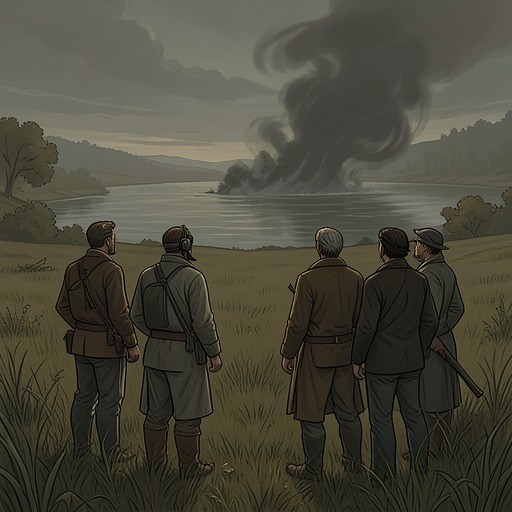
The Colour Out of SpaceThe Winooski River enters the narrative as one of the places where floodwater carried reports of uncanny forms into public discussion. Near Montpelier, witnesses were said to have seen bizarre objects in the swollen river; the account helps turn the waterway into an early point of contact between a natural disaster, local memory, and a mystery about what might inhabit Vermont’s remote hills.
Setting and Flood Reports
The reports followed the unprecedented Vermont floods of November 3, 1927. Albert N. Wilmarth, an instructor at Miskatonic University and an amateur student of New England folklore, encountered them amid newspaper coverage of hardship and relief. The Winooski River near Montpelier was one of three separate river locations named in the stories, alongside the West River and the Passumpsic River. Wilmarth understood these as distinct reported incidents, not as evidence that the same object had been seen at every site.
Witnesses described pinkish, roughly five-foot-long forms with crustaceous bodies, large dorsal fins or membranous wings, several pairs of articulated limbs, and a many-antennaed, convoluted shape where a head might be. They insisted that the forms were neither human nor any animal familiar in Vermont, despite superficial similarities to bodies washed along by the flood. The account gives no separate identifying detail about a Winooski specimen; the description belongs to the reports considered together.
Folklore and the River’s Place in the Rumors
Wilmarth initially explained the river reports through the region’s half-forgotten legends of hidden beings in remote hills, deep woods, and steep valleys. In his view, flood witnesses may have glimpsed bloated human or farm-animal remains in the turbulent water, while inherited stories supplied the monstrous features. The Winooski report thus arrived already entangled with a folklore tradition that made uncanny interpretations available to people trying to understand what the flood had brought downstream.
The legends themselves varied across communities and generations. Some accounts treated the beings as dangerous presences in secluded places; Pennacook traditions, as Wilmarth summarized them, described the Winged Ones as coming from the stars and maintaining earthly mining outposts. Stories also associated the beings with disappearances, strange tracks, and voices in the woods. These traditions concerned the wider hill country rather than the Winooski alone, but they shaped the interpretive background against which reports from the river were received.
Narrative Significance
At first, the Winooski report is evidence chiefly of how folklore can frame perception: Wilmarth regards the physical remains as natural and the monstrous description as an imaginative overlay. His educated opponents, however, point to the legends’ persistence and the hills’ unexplored reaches as reasons not to rule out a surviving hidden race. The disagreement makes the river report more than a local curiosity: it introduces the conflict between skeptical explanation and the possibility that old stories preserve knowledge of something real.
The Winooski River is not presented as the proven source or habitat of the beings, and the narrative does not establish what any flood witness actually saw. Its significance lies in the report’s place at the beginning of Wilmarth’s inquiry: a flood carries strange forms into view, and inherited accounts shape their meaning before the evidence can be settled.